
Monica Breedlove’s Social World
The Bad SeedThis thread follows Monica Breedlove’s buoyant civic life and generous friendship as her confidence in social influence is tested by the crisis unfolding below her.
increasing Bearing strength in each event
 decreasing
Bearing strength in each eventdecreasingCivic Grande Dame

Civic Grande Dame
Public Influence
Monica Breedlove occupies a prominent place in the town’s civic life. She has invested successfully in real estate, written a cookbook, and helped establish a psychiatric clinic; her social standing is reinforced by the charitable work she directs and the people she can mobilize.
Private Contradictions
Her authority coexists with theatrical self-display and a habit of interpreting other people through amateur psychoanalysis. She takes pleasure in conversation, parties, and attention, yet her usefulness is real: she can organize resources, secure favors, and provide practical assistance when someone close to her needs it.
Her relationship with Emory Breedlove is part of this social arrangement. She manages his household and scrutinizes his private life, while he often responds with embarrassed resistance. Their partnership reveals that Monica’s confidence is not simply bluster; it is a way of exercising control in a world where she has built influence for herself.
The Welcoming Neighbor

The Welcoming Neighbor
Gifts and Affection
On the morning of the Fern Grammar School picnic, Monica appears at Christine Penmark’s door to make sure the household is ready. She offers a ride and gives Rhoda Howe Penmark both decorative sunglasses from Emory Breedlove and an old locket that she has treasured since childhood.
Affection as Performance
Monica’s praise of Rhoda is exuberant and indiscriminate. She celebrates the child’s old-fashioned clothes, tidy habits, and acquisitive directness, treating each trait as charming evidence of individuality rather than a possible warning. Her warmth helps establish a trusting domestic circle around the Penmarks.
The locket makes her affection tangible. Monica offers to have its stone changed to suit Rhoda and later arranges its repair and engraving, turning a personal keepsake into a gift for the child. Her generosity is sincere, but her willingness to admire Rhoda without reservation also shows how easily affection can obscure judgment.
The Favor Broker

The Favor Broker
Social Leverage
Monica’s stories repeatedly reveal how effectively she can use her reputation and connections. When a jeweler says Rhoda’s locket will take weeks to repair, Monica hints that his charitable contribution may depend on how she assesses his business. The locket is ready within hours.
Generosity and Pressure
She recognizes that the threat is a bluff, but it works because her civic role gives the implication weight. Monica then eases her conscience by preparing the jeweler’s favorite coconut pie, combining coercion with the kind of personal kindness that sustains her relationships.
This mixture of pressure and care characterizes her wider social life. Monica treats persuasion as an ordinary tool, not a moral failing, and believes she can usually repair any offense afterward. Her method makes her resourceful and effective, while also exposing the limits of a worldview in which personal influence seems capable of solving every problem.
Concern Without Comprehension
Concern Without Comprehension
A Friend’s Distress
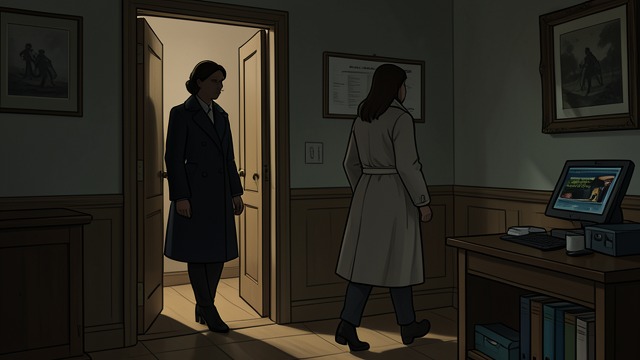
As Christine grows withdrawn, Monica notices changes in her appearance and habits. She asks what is wrong, arranges for a doctor to visit when Christine seems unwell, and later urges her to accept an invitation to the Seagull Inn. Her concern is practical as well as affectionate: she tries to interrupt Christine’s isolation and restore familiar routines.
The Limits of Intuition
Monica senses that the change began around the school picnic, but she cannot identify its cause. Christine refuses to confide in her, and Monica’s customary explanations—fatigue, worry, or a passing depression—cannot reach the secret her friend is hiding.
Monica’s failure is not indifference. She repeatedly offers access, company, and help, but her confidence in reading people gives way when confronted with suffering that Christine cannot name. The gap between Monica’s devotion and her understanding makes her friendship a support that is real but ultimately unable to avert disaster.
A Late Arrival

A Late Arrival
Uneasy Return to the Problem
After returning from the inn, Monica continues to worry about Christine and eventually secures a reservation for her and Rhoda. The outing briefly restores a shared social rhythm, but the deeper estrangement remains. Monica leaves town believing that her friend is still fragile, yet hoping distance and company have helped.
Alarm at Night
On the night Christine dies, Monica notices that Christine is not answering the telephone. She insists on checking, despite Emory’s attempts to dismiss her concern, and organizes the others to reach the locked apartment. Her persistence helps bring Rhoda to emergency care after Christine’s suicide.
At the funeral, Monica still searches for an explanation and retraces the events she knows, but no one can tell her why Christine acted as she did. Her vigilance comes too late to save her friend. The ending preserves Monica’s compassion while showing that care, social expertise, and decisive action cannot always overcome a concealed catastrophe.
Before June 7
June 7, before the school picnic
Late June
Late June through early July
The night Christine dies
